
Editorial
Stop the Hiring Process Stalling Growth
Keep investors happy while the clock's ticking, while staying in control of the bus
Once a B2B technology business completes a funding round, the natural response is to start building the permanent team. New markets need local knowledge, demand generation requires marketing resources, partners need recruitment and support, and the sales pipeline must grow quickly enough to demonstrate that the investment case is working.
Hiring appears to be the most obvious sign of progress. Yet building an international revenue operation takes time. Senior sales and marketing leaders can require several months to identify, recruit and onboard, while the specialist teams beneath them take even longer to assemble.During that period, salary commitments increase, management attention is diverted and the business may still lack the operational capacity required to create demand.
Investors expect market evidence
Investors are unlikely to view recruitment alone as evidence of progress. They will be looking for signs that the business can translate funding into market engagement, commercial opportunities and sustainable revenue.By the time a permanent team is fully operational, several valuable months may have passed without sufficient activity in the market to test the proposition, develop relationships or build pipeline. The company may be investing heavily in its future capability while producing too little evidence of traction in the present.
Outsourcing raises valid concerns
Access capability without losing control
The answer is not simply to outsource marketing. It is to create an operating model that gives the business immediate access to specialist capability while preserving its ownership of customer data, commercial decisions and market relationships.Research, content creation, campaign technology, partner recruitment, appointment setting and event activation can all be supported externally. This is particularly valuable immediately after a funding round, when several capabilities are required at once but the company does not yet know how much permanent resource each function will ultimately justify.
Connect activity to revenue
Any external resource must be closely integrated with the internal revenue operation. Specialists should understand the company’s commercial objectives, ideal customer profile, proposition and qualification criteria. Internal sales and marketing leaders should have full visibility of the activity taking place, the behaviour of target accounts and the intelligence emerging from buyer and partner engagement. Too often, this connection is missing. Marketing providers are measured on reach, clicks or lead volumes, while internal sales teams are judged on opportunities and revenue. Each side optimises for a different outcome, leaving the business with a gap between initial engagement and commercial progression.Measure traction, not activity
Measures should follow the buyer further through the commercial process. Qualified engagement, sales acceptance, meetings, opportunity progression, partner involvement and pipeline contribution provide a much clearer indication of whether the activity is creating genuine traction. This also gives investors and leadership teams more meaningful evidence of progress than recruitment numbers, campaign volumes or top-of-funnel reporting alone.Let the market shape the plan
External activity should produce commercial intelligence as well as demand. Repeated objections may show that pricing, implementation or compliance concerns are slowing progress. Strong responses from an unexpected sector may suggest that the original customer profile was too narrow. Weak engagement with established global messaging may indicate that the proposition needs to reflect different regional priorities. An external provider should be expected to identify and share these patterns, not simply deliver an agreed volume of activity. Internal leaders must then be prepared to respond, adjusting positioning, qualification criteria or investment when market behaviour challenges the original plan.Build the right team with evidence
As the operation develops, some capabilities can move in-house because they have become central to differentiation, require continuous customer proximity or have reached a scale that supports permanent recruitment. Others may remain external because specialist providers offer broader expertise, better technology or economies of scale. The market evidence gathered during the earlier activity can help the business decide which roles it genuinely needs, rather than recruiting an entire structure based on assumptions made before launch.Create traction while you hire
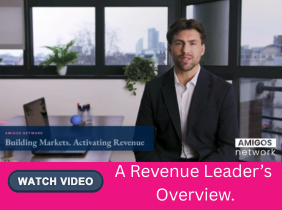
The decision is not whether to hire or outsource. It's about creating traction now while building the right permanent organisation for the future. Funding creates a limited window in which expectations rise quickly. The strongest operating model is one that gets the company into the market sooner, produces measurable commercial learning and ensures that strategic control becomes stronger—not weaker—as the business scales.This short video outlines how this powerful activation programme provides immediate operational infrastructure and execution which is backed by performance guarantees.
Activate your Market NOW!
A short VIDEO summary of how to fast-track your GTM and pipeline with this performance-backed programme
Click here