
Editorial
Prioritising purpose-driven content over content proliferation
Why it's important to growth strategies
Marketing teams face an overwhelming pressure to produce content at an unprecedented pace.
Proliferation of content - where the sheer volume of output takes precedence over its quality and intent - has become a common practice. While this approach may seem advantageous in the short term, it often results in diluted brand messages, disengaged audiences. wasted resources and unfulfilled sales pipelines.
This whitepaper argues that strategy of a “less is more” focus on purpose-driven content, rather than an emphasis on quantity, being the key to achieving meaningful engagement and long-term success.
Understanding content proliferation
Content proliferation refers to the widespread practice of generating large quantities of content without a clear strategic direction or defined purpose. This approach is often driven by the mistaken belief that more content equates to greater visibility and influence. However, in reality, this leads to a saturation of generic and redundant information that fails to resonate with audiences.
The consequences of content proliferation are manifold. Audiences become fatigued by the constant barrage of irrelevant content, leading to diminished engagement and a weakened perception of the brand. Moreover, the resources invested in producing such content - whether time, money, or creative effort - are often squandered, yielding little return on investment.
The shift toward purpose-driven content
Purpose-driven content is content that is created with a clear intention and aligned with specific business goals. It is not merely about producing content for the sake of it, but about crafting messages that resonate with target audiences, deliver against their need for information and entertainment whilst reinforcing brand identity and driving tangible outcomes.
The benefits of purpose-driven content are significant:
- Stronger brand identity: By focusing on content that reflects the core values and mission of the business, brands can establish a consistent and authentic identity that resonates with their audience.
- Enhanced audience engagement: Purposeful content is more likely to engage audiences because it addresses their needs, interests, and concerns in a meaningful way. This means aligning it with marketing outcomes that will generate sales success.
- Higher conversion rates: Content that is strategically aligned with business objectives is more effective at guiding audiences through the customer journey, resulting in higher conversion rates.
- Improved ROI: By investing in quality over quantity, businesses can achieve better returns on their content marketing efforts, as each piece of content serves a clear and valuable purpose.
Key elements of purpose-driven content
To successfully implement a purpose-driven content strategy, several key elements must be considered:
- Audience understanding: A deep understanding of the target audience is essential. This includes knowing their needs, preferences, pain points, and the types of content that resonate with them. Audience research and segmentation
are crucial steps in this process. - Clear goals: Each piece of content should be created with specific, measurable objectives in mind. Whether the goal is to educate, inspire, or convert, it must be clearly defined and aligned with the broader business strategy.
- Strategic planning: Content should be integrated into a comprehensive marketing strategy that supports the company’s vision and objectives. This requires careful planning and coordination across different channels and platforms.
- Quality over quantity: The focus should be on producing fewer, but higher-quality, pieces of content. Each piece should be crafted with care, ensuring it delivers value to the audience and reinforces the brand’s message.
- Consistency and authenticity: Consistency in messaging and tone is critical to
building trust with the audience. Authenticity should underpin all content efforts,
ensuring that the brand’s voice is genuine and relatable.
Challenges of implementing a purpose-driven content strategy
Transitioning to a purpose-driven content strategy is not without its challenges:\
- Overcoming the pressure to produce more: Businesses must resist the temptation to prioritise quantity over quality. This often requires a cultural shift within the organisation, to one where success is measured by the impact of content rather than its volume.
- Resource allocation: Shifting focus from quantity to quality may require reallocation of resources. This could involve investing in better research, hiring skilled content creators, or dedicating more time to strategy and planning.
- Measuring success: Traditional metrics, such as the number of posts or frequency of updates, may no longer be relevant. Instead, success should be measured by engagement rates, brand sentiment, and conversion rates - metrics that reflect the true impact of purpose-driven content.
Results that speak for themselves
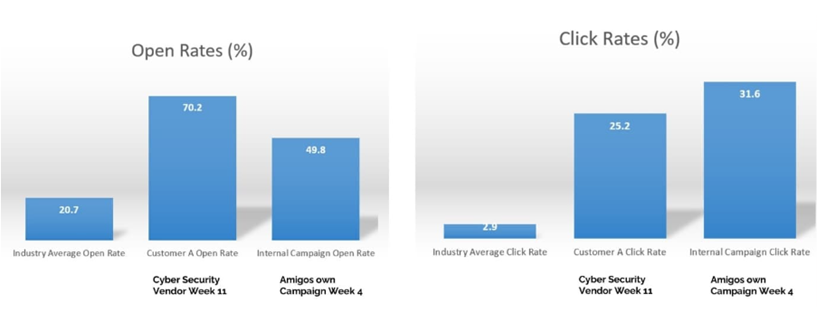
Here we demonstrate how, even after a few short weeks, engagement stats rocket if your content is working. Examples are a snapshot of 1 week (the same week) for an existing customer and our own marketing campaign.
Fig 1: Live statistics from sales portal, two campaigns
What this does for your sales pipeline
Getting these sorts of engagement rates week on week does wonders for your sales pipeline and keeps opportunities moving through the engagement funnel.

Fig 2: Live sales pipeline from sales portal, single vendor
Actionable steps for transitioning to purpose-driven content
For businesses looking to shift towards a purpose-driven content strategy, the following steps are recommended:
- Audit your current content: Start by conducting a thorough audit of your existing content. Identify what is working, what isn’t, and where there are gaps in your content strategy.
- Define your content purpose: Clearly articulate the purpose behind your content efforts. This should be closely aligned with your business goals and the needs of your target audience.
- Develop a content strategy: Create a detailed content strategy that outlines how you will produce, distribute, and measure purpose-driven content. This strategy should be flexible, allowing for adjustments based on performance data and audience feedback.
- Continuous optimisation: Regularly review and refine your content strategy based on the results you achieve. Continuous optimisation is key to ensuring that your content remains relevant and effective.
In summary
In times where content proliferation has become the norm, businesses must recognise the value of purpose-driven content. By focusing on quality, relevance, and strategic alignment, brands can build stronger connections with their audiences, achieve higher engagement rates, and drive better business outcomes.
The future of content marketing lies not in the quantity of content produced, but in the impact that content can have when created with purpose.